About
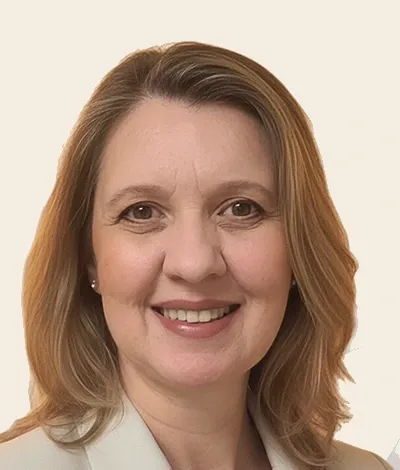
Elaine Lizeo
Consulting, mentoring and training in leadership, learning and team development.
The base of my work is the dynamic model of group learning I developed in my doctoral thesis. It grew out of a simple, stubborn question: why do teams made up of competent people stall?
The answer I found was not in the people. It was in the dynamics — the reinforcing loops, the delays between cause and effect, the invisible trade-offs that let a good solution create a new problem somewhere else. That is what I help leaders, teams and organisations see.
The Leadership Architecture is the practical form of that model: four axes that organise development from the individual to the system. The Playbook — Teams That Learn, Leaders Who Transform goes deeper: the dynamic underneath, with tools for diagnosis and intervention.
Education and career
The Leadership Architecture did not come out of a course: it came from years in the classroom, years on the floor of organisations, and a research question that would not let go — how does a group learn together?
- 1997 MBA no MIT Sloan Cambridge, EUA.
- 2000 Doutorado na FGV Volta ao Brasil, para a EAESP.
- 2000–03 Pesquisa em Boston Visitante no MIT Sloan.
- 2004 Tese defendida O modelo de aprendizagem em grupo.
- 2005 Pós-doutorado no MIT Behavioral & Policy Sciences.
- 2006 Primeira turma Vinte anos de prática.
- 2020 Instituto ComumLab Jovens líderes, comunidades vulneráveis.
-
PhD in Business Administration
Organisational Studies — FGV-EAESP, São Paulo. Thesis research carried out in Boston.
-
Post-doctorate and MBA
MIT Sloan School of Management, Cambridge, USA. More than eight years living in the Boston area.
-
Research at the MIT Center for Digital Business
Refining the Matrix of Change, a tool for analysing the impact of organisational change. Also with MIT’s System Dynamics group.
-
Teaching assistance and lecturing
Introduction to eBusiness and Applications of System Dynamics (MIT), eVentures Strategy (London Business School), and co-instructor of System Dynamics Foundations (MIT and WPI).
I wrote a master’s thesis even though the MBA did not require one, and had the honour of working under two names in Organisational Studies: Peter Senge, of MIT, author of The Fifth Discipline, and Amy Edmondson, of Harvard, author of Teaming.
Four commitments.
-
Strategic
Method before opinion. Criteria before instinct.
-
Human
A result that lasts is a result that does not burn people.
-
Innovative
Experiment small to learn fast.
-
Transformative
What changes has to stay standing after the programme ends.
What the symbol means.
The brand reflects a commitment to developing people, teams and organisations, combining method and sensibility to produce results that last.
- The open circle
- Continuous learning, constant development, and openness to new possibilities. It is never complete, because evolution has no end.
- The dot outside the circle
- The individual, the singular view, and the capacity to create impact and transformation beyond the obvious.
- The handmade stroke
- Humanity, authenticity and closeness. Every imperfection shows that people and organisations are real, singular and full of history.
- The terracotta colour
- Energy, enthusiasm, human connection and solidity. A colour that invites trust and action.